
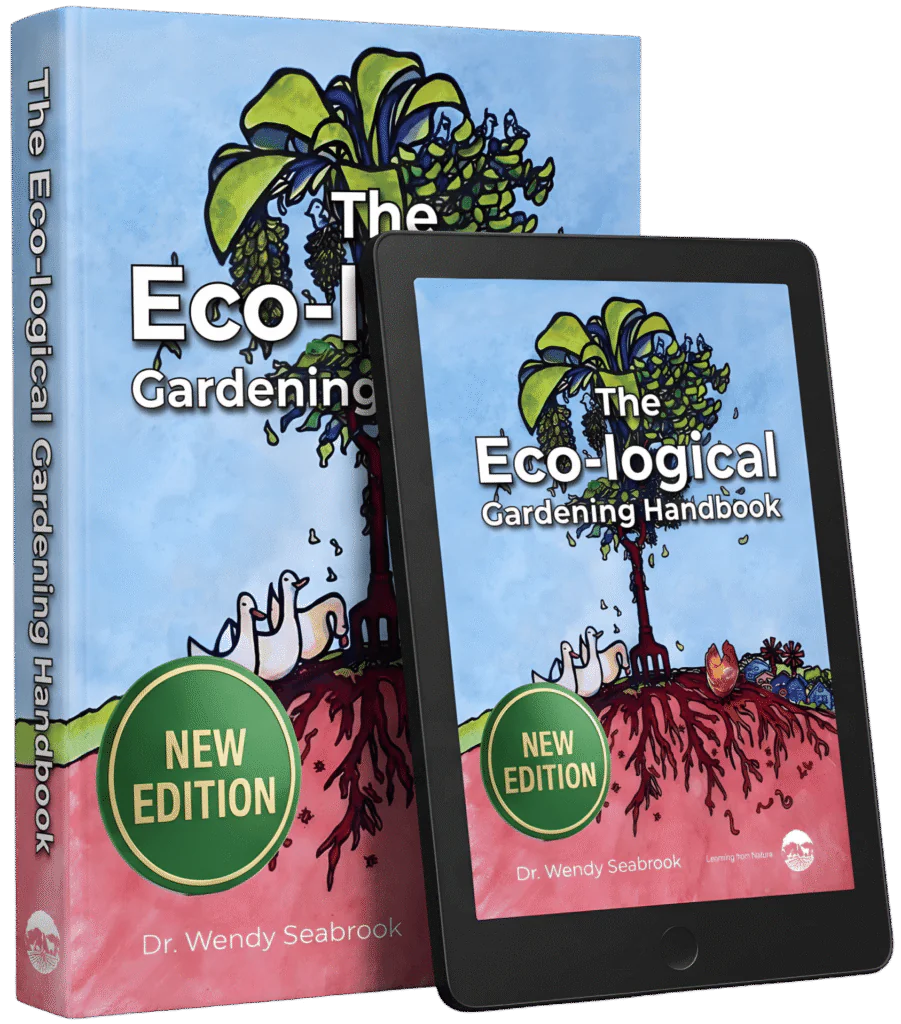
Ecological Gardening Handbook
Get Support with Growing Food
Most modern gardening relies on external inputs to replace functions that a healthy ecosystem can perform for free. When we dismantle these natural partnerships, our costs go up and our garden’s resilience goes down. This Ecological Gardening Handbook teaches you how to repair these broken systems so you can learn how to:
Written by Dr. Wendy Seabrook (Ph.D. ecologist and permaculture consultant), the Ecological Gardening Handbook delivers over 100 pages with clear diagrams, real-world case studies, and hands-on video guides to help you build a self-sustaining garden.


Need more information about the Ecological Gardening Handbook? Then read on…
Superb Value
Whether you're a seasoned gardener or just starting out, this Ecological Gardening Handbook is renowned for its practical, science-based approach to creating self-sufficient and resilient food gardens.
Packed with clear diagrams, links to videos, and a comprehensive toolkit of regenerative practices, you'll be equipped with the tools to fix your gardening problems and benefit again from Nature's free ecological services.
The Ecological Gardening Handbook is organized into six sections:
The Author
Dr Wendy Seabrook, is one of the world's leading experts on eco-logical approaches to food gardening. She demonstrates that while ecosystems are complex, repairing them isn’t complicated when we support Nature's experts, the life in our soil and biodiversity above ground.
Whether growing in a backyard in Wales, a community garden in California, or food garden in Kenya, using this Ecological Gardening Handbook, you can concentrate on what's essential and develop effective solutions for your climate and unique growing conditions.
Solidly grounded with the latest research, Wendy translates the science into an easily digestible format and reveals how gardeners around the world benefit from growing food eco-logically.
Frequently Asked Questions
Will this Approach Work in my Climate?
Gardeners from the cold north of Scotland to Africa's hot, sultry tropics and arid landscapes use this ecological approach. While the techniques and species differ, the ecological principles remain the same.
Will I harvest less food?
Gardeners harvest more food by giving their crops five-star catering directly from their soil ecosystem rather than the inputs they apply, suffer less from extreme weather and gain opportunities to grow more food with the space they have available.
Reduce fertilizer costs
Reduce pests problems
Drought and water-proof your farm
Recover quicker extreme weather


© Copyright Learning from Nature.
All Rights Reserved