
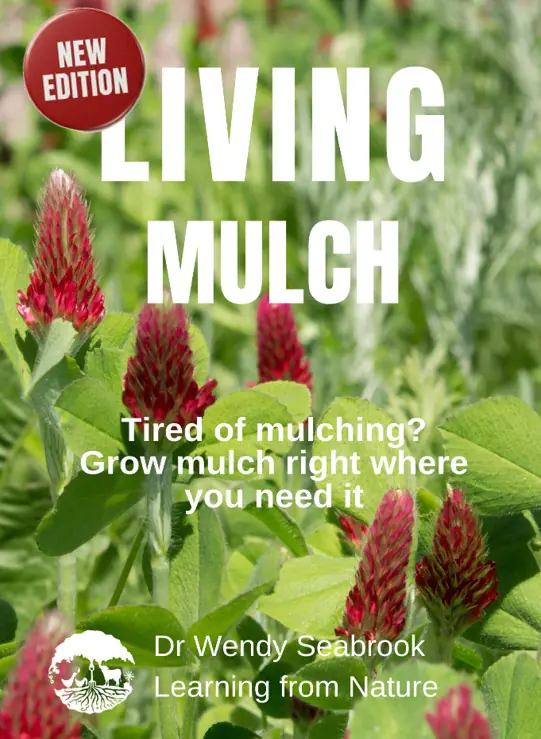
Living Mulch Handbook
How much money and energy do you waste every year spreading mulch—only to watch it break down and disappear?
Traditional mulch is useful, but spreading it is not the easiest, cheapest, or best thing to do. Living mulch frees up our time. By using a strategic mix of perennial and self-seeding ground cover plants, you grow mulch - right where it's needed. Living mulch creates a lush, self-sustaining ground cover that reduces weed pressure and improves soil health naturally. It saves time and money, eliminating the need for annual mulching.
This Handbook includes:
Need more information about Living Mulch? Then read on…
How this Handbook Helps You
The Handbook is 100% focused on helping you achieve practical outcomes - saving you the time and trouble of finding your own way.
The Handbook walks you through a series of straightforward, tried and tested steps to prepare your site to maximize plant establishment rates, quickly understand your unique growing conditions, and select species rapidly producing a dense ground cover. Choose between three models.
Basic Model
A quick and easy way to test drive living mulch before making a bigger commitment.
Standard Model
Learn how to select species which do well in your growing conditions. Be rewarded with less ongoing maintenance and the perks provided.
Premier Model
A high-yielding, fully integrated living mulch that combines resilient ground cover with edible, utility, and ecological support plants.
How much do you spend on mulch?
With bales retailing at $15 USD, many families spend over $150/year keeping gardens mulched. For market and community gardeners, the costs are substantially higher.
I used to spend over $800 and about four weeks every year mulching. Not now!
Living Mulch is better for your soil
Research shows that mulch and other above-ground sources of organic materials have a limited impact on soil organic matter levels. That's why mulch has the annoying habit of disappearing so quickly!
Growing living mulch, we supply the roots and root exudates needed to increase organic matter levels in our soil.
Living mulch creates a mini-ecosystem: a diversity of ground cover plants providing habitat and food for insects and birds; mulch for beetles, earthworms and other animals.

© Copyright Learning from Nature.
All Rights Reserved